Upon hearing the news of the horrific terrorist attack on the first night of Hanukkah at Bondi Beach in Sydney, Australia, the entire Jewish world was shaken. A day that was meant to kick-off the festival of lights was marred by darkness. And we were all met with questions. Why can’t we live in peace, even on a holiday? How could the world let this happen? And what can we do for the community?
I had the privilege, if you will, to accompany a long time friend and mentor of mine, Rav Avi Weiss, and friends, on a trip to the Bondi Jewish community.
We were walking from synagogue to a Shabbat dinner in Sydney when the scale of security became impossible to ignore. Outside the shul, armed guards stood at multiple points. Barricades. Controlled entrances. Radios.
“Shabbat shalom.”
“Where are you from?”
“Which shul do you go to?”
“Why are you here?”
An interrogation that would not have shamed Fort Knox.
As we left, an armed security guard accompanied our group. Ben, a large Australian man, walked slightly to the side. At one point, he quietly stepped between us and someone approaching, redirecting them without drama or explanation. We kept walking.
There was no siren. No immediate threat. No war unfolding in the background. Just the recognition that being visibly Jewish now required protection in a place that should feel ordinary.
In moments of crisis, the Jewish instinct is often to explain. To contextualize. To analyze. To debate causes and consequences. Those instincts matter. But they are not the first obligation. The first obligation is to be present.
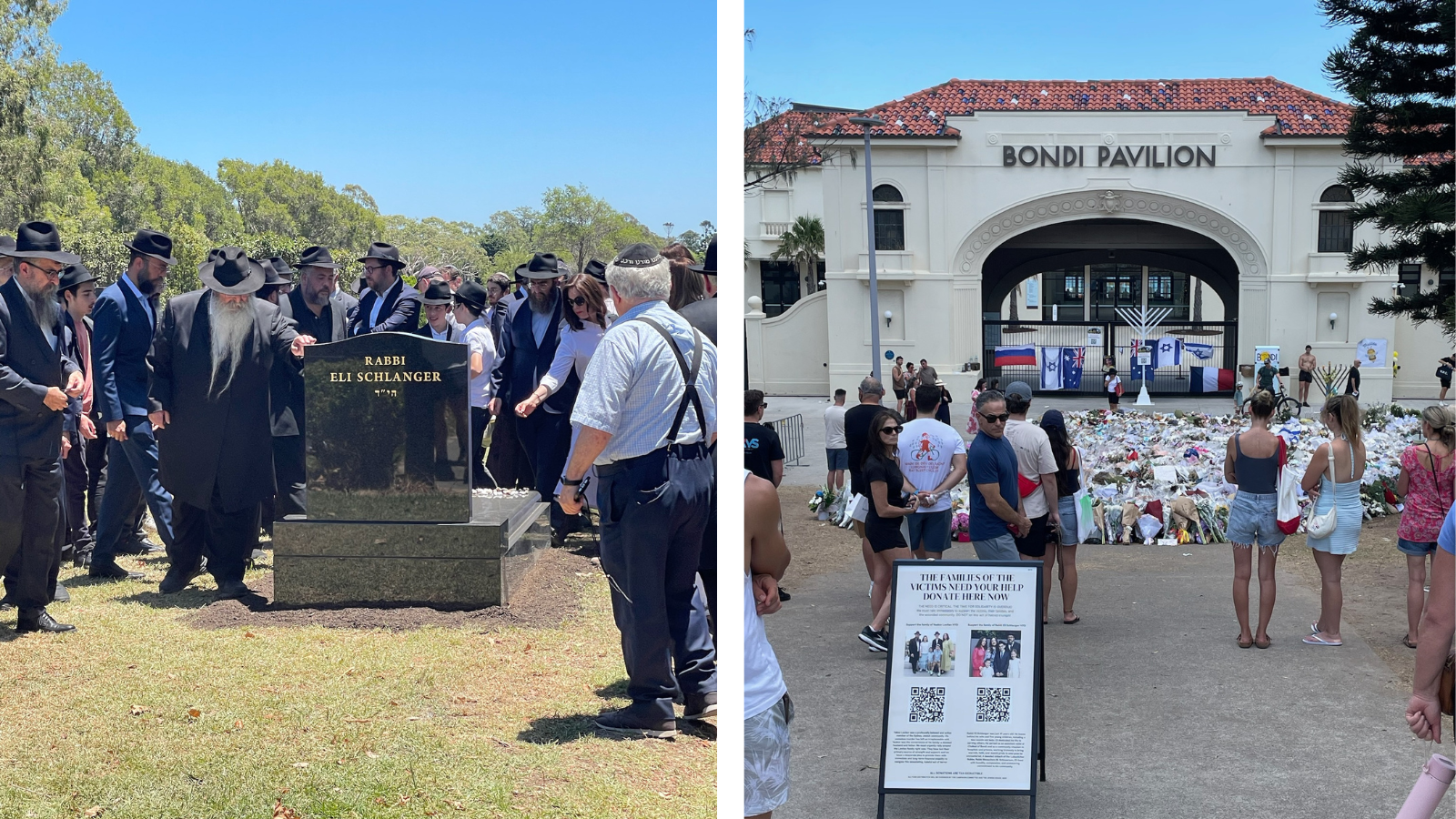
In the aftermath of the Bondi Beach attack, this order of obligations became clear very quickly.
As one might have expected, there was no shortage of words. There was, however, an urgent need for people to show up. Not to fix anything. Not to attempt to frame or contextualize. Not even to lead anyone. The urgent need was for people to simply be there.
That is where Jewish peoplehood begins. Not as an idea, but as a practice.
For many of us, one of the most disorienting aspects of moments like Bondi is the feeling that we must have answers. Why did this happen? What does it mean? What should our carefully-crafted public statements say? However urgent it feels, Jewish tradition is actually deeply suspicious of premature meaning-making. Repeatedly, our texts insist that responsibility precedes explanation.
There was no language that could resolve the pain. No words could make sense of the loss. And so the work was not to explain, but to stand within the moment alongside those who were living it.
I want to make it clear: showing up is not heroism. It is an obligation.
When people in Sydney asked where we were from, first came surprise when they learned we had come from the United States, followed by a split second of disbelief, and then gratitude. They weren’t necessarily grateful because we traveled so far, but rather because we had chosen to come at all. The most common question they asked was why we came.
To this, Rav Avi Weiss offered a simple answer: “When you think of the Jewish people not as a nation, not as a religion, and not as an ethnicity, but as a family, the question is not why we came. It is how could we not.”
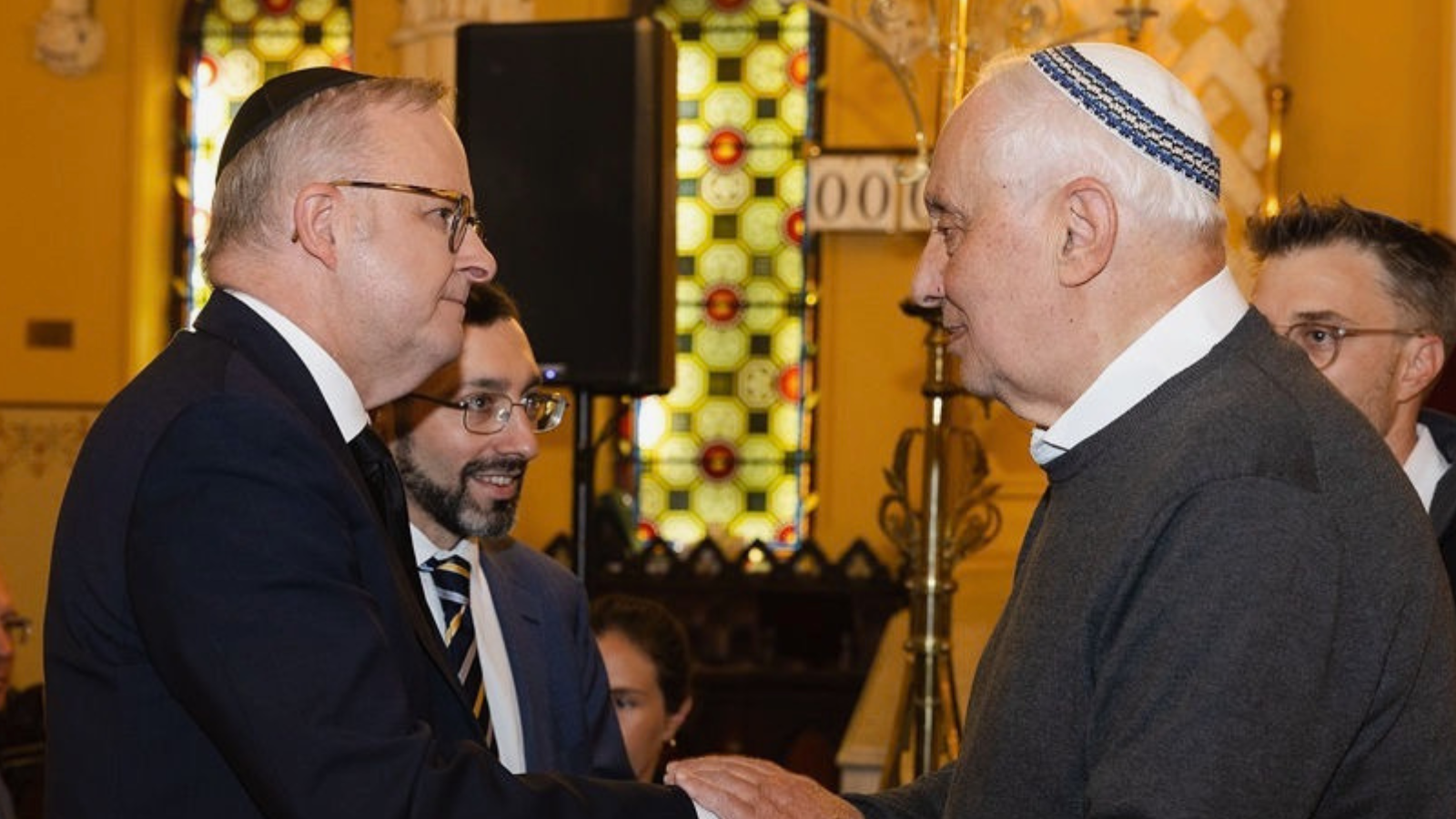
Peoplehood is not an act of generosity bestowed from the outside. It means refusing to treat Jewish suffering somewhere else in the world as someone else’s problem. It means insisting that distance does not resolve our collective responsibility to one another.
Naturally, we were not surprised by the community’s grief. We were much more taken aback that people were so appreciative simply for our presence. For the fact that others had crossed oceans, time zones and schedules to be with them. Everywhere we went, we were met with the same sentiment: thank you for coming. Thank you for being here.
To be clear. This isn't about celebrating our magnanimity. Far from it. It was a reminder that the simple act of showing up, of being present, has become rare. This type of work is not glamorous. It does not make headlines. But without it, peoplehood frays.
In shiva homes, in hospital corridors, at vigils and gatherings, the most powerful moments were not speeches. They were seemingly simple moments of accompaniment. Sitting. Listening. Standing together when words ran out. Those moments did not explain what happened. No one could. But they created the conditions for resilience. For people to remain part of a community rather than retreat into isolation.
There is a strong desire right now to return to normal. To move on. To close the chapter. But nothing is back to normal. Not in Israel. Not in North America. Not in Australia.
Antisemitism today might not look the same everywhere, but it is all connected. And our response must be too. An attack on Jews in Sydney is not an Australian Jewish problem. Antisemitism on American campuses is not an American Jewish problem. Terror in Israel is not an Israeli problem.
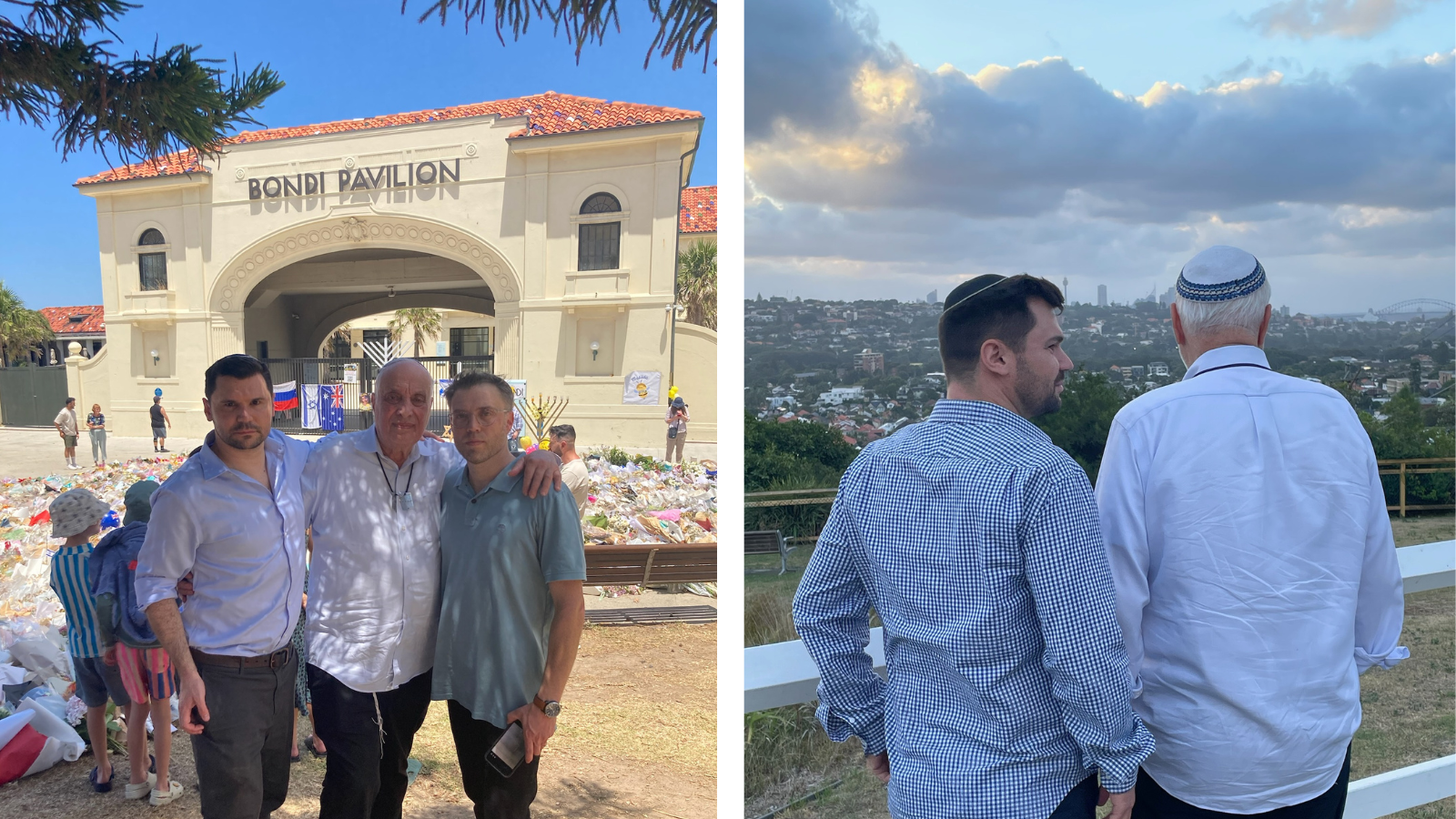
Peoplehood means rejecting those silos and recognizing that all of these problems are ours collectively.
Bondi was not an isolated attack, far, far away. It was a reminder that Jewish Peoplehood is not built only through ideas, conferences, or frameworks. Yes, Z3’s purpose is to create the public square, a space for the exchange of ideas and to lean into our differences, rather than shy away from them. However, before we can even begin to engage in the difficult conversations, first and foremost, we must be able to meet the basic obligation of showing up for each other. We must show up, even across distance or difference.
We did not go to Sydney to fix anything. We went to stand with family.
And that, sometimes, is the most powerful thing we can do.
Read more reflections by Rabbi Amitai Fraiman in the Jerusalem Post and Makor Rishon (in Hebrew).